

Guatemala has one of the richest cultural calendars in Latin America, shaped by a deep blend of Catholic tradition and indigenous Mayan heritage. For American employers managing remote talent from Guatemala, that calendar matters. Holidays here are not just days off on a spreadsheet. They carry real cultural weight, and understanding them is the first step to building a team that works well across borders.
This page covers every official public holiday in Guatemala, plus the major cultural observances that Guatemalan remote workers treat as meaningful time. Use it to plan ahead, avoid scheduling conflicts, and show your team the kind of respect that builds long-term loyalty.
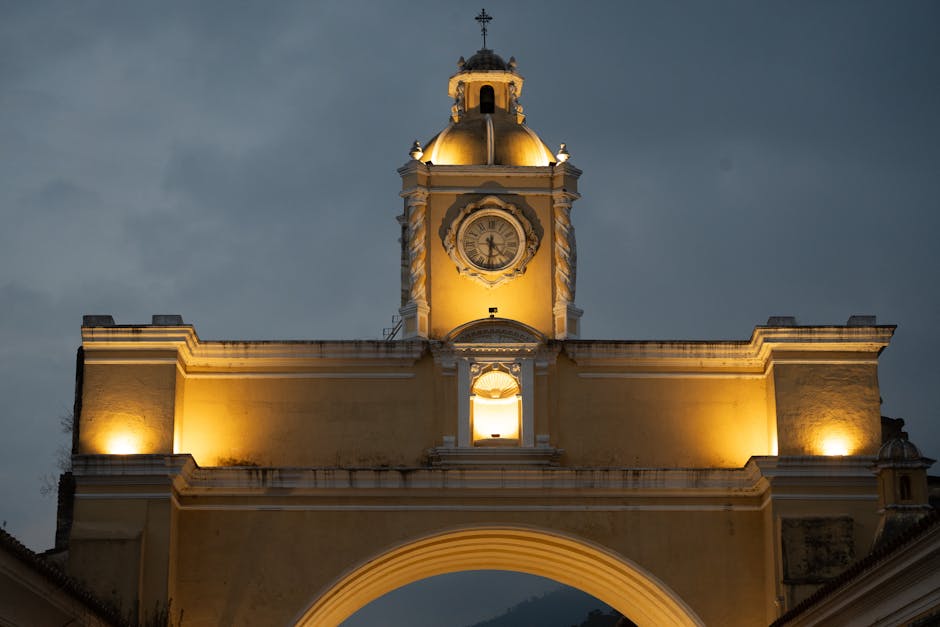
Guatemala
Guatemala’s holiday calendar is driven by two powerful forces: the Catholic faith brought by Spanish colonizers, and the indigenous Mayan traditions that never disappeared. National history also plays a role, with independence and revolution both earning their own commemorations. The result is a calendar that alternates between deeply religious observances, civic pride, and regional celebrations that vary by community.
New Year’s Day (January 1)
New Year’s Day is a full national holiday across Guatemala. Families gather the night before for fireworks, music, and a late meal, and January 1 is typically a quiet recovery day. Most workers are fully off, and businesses, banks, and government offices remain closed. Expect your team to be unavailable on both December 31 (half day) and January 1.
Maundy Thursday (Variable: April)
Maundy Thursday marks the start of the most important week in Guatemala’s cultural calendar: Semana Santa. In cities like Antigua, the streets fill with alfombras, elaborate carpets made from dyed sawdust, flowers, and pine needles that can stretch for entire city blocks. Cucuruchos, men dressed in purple tunics, begin carrying massive wooden floats depicting the Passion of Christ. This is a strict holiday. Count on zero availability.
Good Friday (Variable: April)
Good Friday is the most solemn day of Semana Santa and one of the most observed holidays in the entire country. Processions move through the streets of Antigua, Guatemala City, and towns across the country as marching bands play funerary music. After 3 PM, cucuruchos switch from purple to black mourning attire. Traditional foods like bacalao a la vizcaina (salt cod with peppers and tomatoes) and torrejas (cinnamon-infused French toast) are eaten throughout the day. No one works.
Holy Saturday (Variable: April)
Holy Saturday is a national holiday and continues the Semana Santa observances. Processions continue in many cities, and the atmosphere remains reflective and communal. Families gather, and travel peaks as Guatemalans return to their home towns or head to Antigua for the final processions. Most businesses remain closed.
Easter Sunday (Variable: April, cultural observance)
Easter Sunday is not an official government holiday but is treated as one by the vast majority of Guatemalan workers and employers. It marks the end of Semana Santa, and attendance at Mass is near-universal. Families gather for large meals, and the week as a whole functions as a near-total shutdown in Guatemala. Plan for your team to be fully offline from Maundy Thursday through Easter Sunday.
Labor Day (May 1)
May 1 is International Workers’ Day and a firm national holiday in Guatemala. Labor unions organize marches in Guatemala City and other major cities. Most private employers give the day off, and remote workers will expect it. The government also sometimes extends this to May 2 as a “bridge” holiday, particularly for public-sector employees.
Mother’s Day (May 10, cultural observance)
Mother’s Day on May 10 is not a universal public holiday but is recognized by Guatemalan labor law as a paid holiday for working mothers. In practice, it often affects team availability more broadly. Many employers give mothers the day off, and even non-mothers may leave early or have reduced productivity as families celebrate. It is worth noting on your calendar and checking with your team in advance.
Army Day (June 30)
June 30 is Army Day, commemorating the Liberal Revolution of 1871. It is a national holiday with military parades and civic events. While it does not carry the same cultural weight as Semana Santa or Independence Day, it is a firm day off for most Guatemalan workers. Government offices, banks, and many private businesses are closed.
Assumption of Mary (August 15, Guatemala City)
August 15 is a regional holiday specific to Guatemala City, where it serves as the city’s patron saint day. Workers based in the capital will be off. If your team members are outside Guatemala City, this holiday may not apply to them, but it is worth confirming with each team member where they are located. The day is marked with processions and local festivities in the capital.
Independence Day (September 15)
September 15 is one of Guatemala’s most celebrated national holidays, marking independence from Spain in 1821. The celebrations actually begin on September 14, with a torch relay called the Antorcha de la Independencia that runs across the country. Schools and community organizations stage parades with traditional marimba music, folkloric dances, and national dress. Remote workers take this seriously. It is a full day off, and the evening before often involves community events that run late.
Day of the Race (October 12, cultural observance)
October 12 is observed as Dia de la Raza, a day recognizing the indigenous and mixed heritage of Guatemala’s people. It is listed as an observance rather than a strict public holiday, but many Guatemalans use it to reflect on cultural identity. Depending on your team member’s employer or region, they may or may not take it as a day off. It is worth asking in advance.
Revolution Day (October 20)
October 20 commemorates the 1944 Guatemalan Revolution, a democratic uprising that ended a long period of authoritarian rule. It is an official national holiday with civic ceremonies and is particularly observed in public-sector workplaces. Private employers also typically give the day off. Remote workers in both public and private roles will generally be unavailable.
All Saints’ Day (November 1)
All Saints’ Day is a deeply observed national holiday in Guatemala, blending Catholic tradition with Mayan ancestor veneration. Families visit cemeteries to clean and decorate graves with marigolds and offerings. In the town of Santiago Sacatepequez, the holiday is famous for the Barriletes Gigantes festival, where enormous handmade kites, some over 20 meters wide, are flown over the cemetery. Remote workers across the country take this day off and often travel to their hometowns the day before.
Christmas Eve (December 24, half day)
Christmas Eve in Guatemala is a family-centered celebration that begins in the afternoon and peaks at midnight. Guatemalan families gather for large meals featuring tamales wrapped in banana leaves, ponche (warm fruit punch), and fiambre variations. Fireworks launch at midnight in cities and towns across the country. The official holiday status is a half day, but in practice most workers are unavailable from mid-afternoon onward.
Christmas Day (December 25)
Christmas Day is a full national holiday. After the midnight celebration on December 24, Christmas Day is typically spent with extended family. Workers are fully off, and businesses are closed. Given the late-night nature of the December 24 celebration, do not expect your team to be reachable until well into December 25 at the earliest.
New Year’s Eve (December 31, half day)
December 31 is officially a half day, but like Christmas Eve, the afternoon and evening belong to family and celebration. Guatemalans celebrate with fireworks, family dinners, and community events. The combination of December 24, 25, and 31 through January 1 creates a de facto holiday period where productivity slows significantly. Plan your end-of-year deadlines accordingly.
How to work with Guatemala’s national holidays as an American Employer
Four holidays in Guatemala are non-negotiable. Maundy Thursday, Good Friday, Holy Saturday, and Christmas Day require full days off. No exceptions. Semana Santa in particular is treated as a near-sacred week across the country. UNESCO recognized it as intangible cultural heritage of humanity in 2023, and its importance in Guatemalan life cannot be overstated. If you have a deadline near Semana Santa, move it at least a full week before the week begins. Expecting availability during that period will damage trust fast.
Several other holidays are firm in name but more variable in practice depending on industry and employer. Army Day (June 30), Revolution Day (October 20), and the half days on December 24 and December 31 are official holidays, but some private-sector workers in tech-adjacent or international-facing roles may check in briefly. Do not count on it. Independence Day (September 15) falls in between: the parades and community events are genuinely important to Guatemalans, but workers who are used to remote international roles may respond to urgent messages. October 12 and Mother’s Day (May 10) are the loosest: worth acknowledging, but availability varies by worker.
On communication norms: Guatemalan workers generally appreciate a heads-up acknowledgment before major holidays. A quick Slack message saying “enjoy Semana Santa” goes a long way. Do not expect Slack responses during the core Semana Santa days or on Christmas. For holidays that are half days by law (December 24 and 31), set clear expectations at least a week in advance. If you have a deliverable due, move it to the morning before or wait until the next business day. Guatemalan workers are reliable and deadline-oriented, but they will prioritize family during the major observances without apology.
If you are building a team in Guatemala and want support navigating the calendar from day one, Go Carpathian places vetted remote talent from our Latin America talent pool and briefs you on working norms before the first day. Whether you need a virtual assistant or a senior hire, we handle the sourcing, vetting, and placement so you can focus on the work.
Ready to Hire in Guatemala?
Go Carpathian connects American companies with pre-vetted remote talent from Guatemala and across Latin America. We handle sourcing, vetting, and placement. You get the right person, fast.